


Over the past decade, there has been an increase in demand for aligners as people look for more comfortable and less noticeable orthodontic tools. The goals of orthodontic therapy are to improve chewing and attractiveness while treating malocclusion and craniofacial skeletal anomalies. It is important to consider the effects that orthodontic appliances may have, directly or indirectly, on periodontal tissues and oral microbiota. The structure of plaque biofilm is fundamentally changed by the placement of orthodontic appliances, and oral hygiene practices have a significant effect on periodontal and dental health.
The development of transparent thermoplastic materials and CAD-CAM technologies has contributed to the creation of clear alignment therapy. Over the past 20 years, aligners have improved in flexibility, conformability to the dental arch, and orthodontic strength. Clear aligners can now be used in more complex cases than basic anatomy thanks to additional instruments such as mini screws, elastics, sectional wires, and rapid palatal expanders.
Reduction in the incidence of injuries
The use of aligners has shown encouraging results in reducing the incidence of white spot lesions, gingival health, and plaque index. On the other hand, ridges, grooves, microcracks, and abrasions on the surface of the aligner can create an ideal environment for bacterial adhesion and plaque biofilm growth. It appears that the combination of mechanical and chemical approaches works well to remove plaque biofilm from the aligners and inhibit pigment adsorption.

Patients can more easily regulate plaque by wearing aligners, which reduces plaque buildup and prevents periodontitis from worsening. Throughout the course of treatment, they generate controlled intermittent tensions, giving the periodontal membrane time to repair. According to studies, patients who used aligners during their orthodontic treatment experienced relatively positive results and their periodontitis did not worsen. In conclusion, due to their comfort, ease of use, and ability to support the maintenance of periodontal health, aligners are favored by both patients and professionals.
With more than 700 different microbial species, the oral microbiome is essential for preserving the balance and stability of plaque biofilm. The microbiological structure of supragingival plaque, subgingival plaque, aligner, and saliva during aligner treatment has been studied using 16S rRNA gene sequencing.
Research indicates that although supragingival plaque is not significantly affected by clear aligners, the richness and uniformity of the splint microbiome gradually decreases. An increase in bacteria associated with caries occurs as a result of the affinity of bacterial species with the biomaterials used in clear aligners. To avoid detrimental effects on enamel health, patients should clean their aligners regularly.
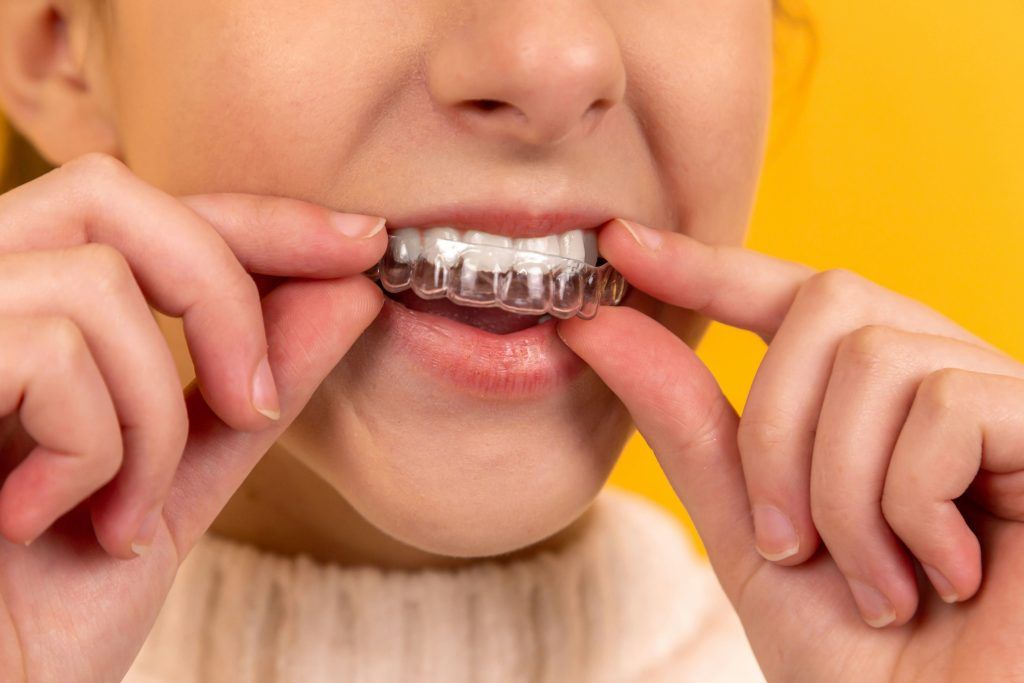
The aligners have been coated with cinnamon and antibacterial nanoparticles to prevent the growth of bacteria and the creation of biofilms on the inner surface. Studies conducted in vitro have demonstrated a high degree of ability to prevent Porphyromonas gingivalis, Streptococcus mutans and Streptococcus mitis from creating biofilms.
Treatment with clear aligners also modifies the salivary microbiota. When dental plaque forms on healthy tooth enamel, it begins with a specific type of bacteria that adheres to the saliva-wet surface. Over time, more diverse salivary bacterial taxa attach to the surface to produce dental plaque. Additionally, saliva contributes to plaque buildup on the inner surface of the aligners by soaking into the spaces between the aligner and the teeth.
Conclusion of the study
The aligners, being removable, improve oral hygiene and orthodontic effectiveness. Patients should use a mechanical and chemical cleaning and disinfection method to keep the aligners clean and prevent biofilm infection.
There are a few different ways to clean your aligners: you can rinse them under cold running water, brush with a toothbrush, or rinse them in cool water with detergent.
The study findings suggest that wearing aligners could help preserve periodontal and dental health, as well as proper oral hygiene. Prospective investigations or large-scale randomized controlled trials are needed to confirm this finding. To understand how aligners affect dental health and oral microbiota, all stages of orthodontic treatment must be included, including the initial, intermediate, final and maintenance phases.
