Invisible orthodontics has transformed our understanding of dental correction. Beyond aesthetics and comfort, there's a curious question that often surprises: can clear aligners change the way we speak?
Although the voice itself (pitch and timbre) depends on the larynx and vocal cords, pronunciation is influenced by the teeth, tongue, and palate. Therefore, any device that modifies the oral cavity can temporarily alter the articulation of certain sounds.
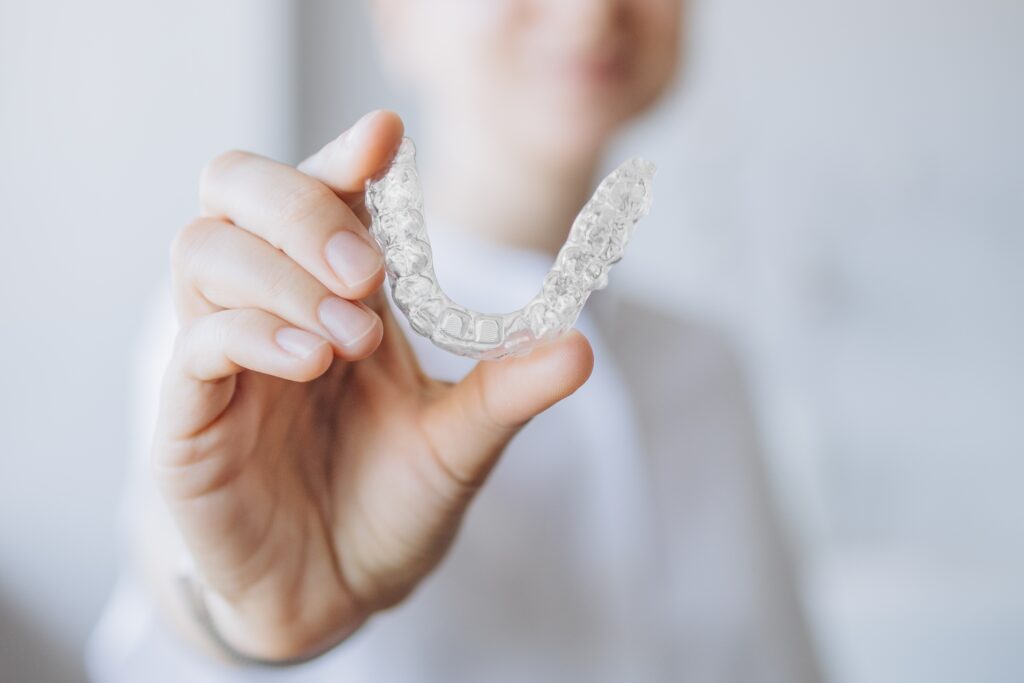
🔹 Observed phonetic alterations
Chen J.'s review and other studies confirm that both braces and aligners can affect pronunciation. The most affected sounds are usually sibilants (/s/, /z/) and some fricatives (/sh/, /ch/, /th/), as these depend on precise contact between the tongue and teeth.
🔹 Duration of the effect
According to the European Journal of Orthodontics and more recent systematic reviews (PubMed ID: 35522548), changes in speech with aligners are usually temporary: most patients recover normal pronunciation within 7 to 14 days thanks to neuromuscular adaptation.
🔹 Patient perception
A study in Angle Orthodontist It was reported that 53.8% of patients experienced mild speech alterations with aligners, but only 1.9% considered it a severe problem. In many cases, the discomfort disappeared with daily practice.

Conclusion
Orthodontics doesn't permanently change your voice, but it can alter articulation and oral resonance during the first few days of treatment. Informing patients about this helps normalize the experience and avoid unnecessary worries. Far from being a drawback, it's an interesting fact that reminds us how much the oral cavity influences our communication.