Orthodontics has undergone a significant transformation over the past decade thanks to technological advances. Modern tools such as 3D printing, intraoral scanners and digital treatment planning have revolutionised the way orthodontic care is delivered, offering greater accuracy, efficiency and patient satisfaction. This article explores these technologies and their impact on clinical practice, with references to recent scientific studies.
3D Printing in Orthodontics
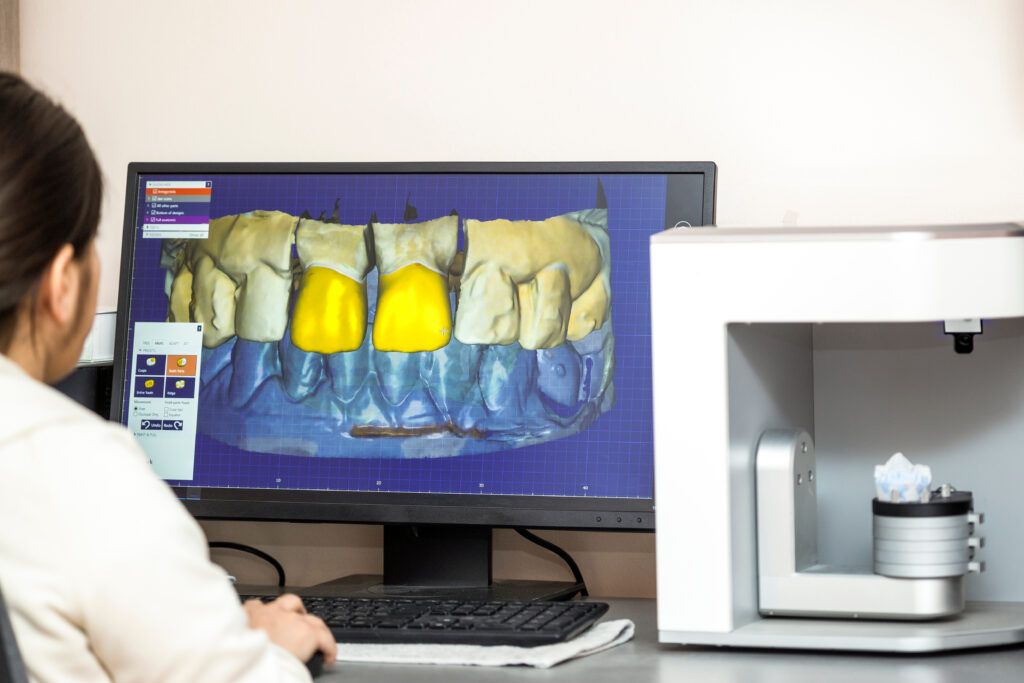
3D printing, also known as additive manufacturing, is now a key part of modern orthodontic practice. This technology allows for the precise manufacturing of orthodontic appliances such as aligners, retainers, and even custom brackets. The process involves converting digital 3D models into physical objects by overlaying materials such as resin or plastic.
Applications in Orthodontics:
- Study models: Instead of maintaining physical plaster models, orthodontists can now store and reproduce digital models on demand. This change not only saves space, but also allows for easy sharing and duplication of records.
- Surgical guides: In orthognathic surgery, 3D printed guides ensure precise bone cuts and positioning, improving surgical outcomes.
- Custom devices: 3D printing allows the production of highly customized orthodontic devices adapted to the patient's anatomy. Studies such as the from Alharbi (2016) They have shown that 3D printed aligners offer comparable accuracy to traditional methods, while reducing production time.
Intraoral Scanners
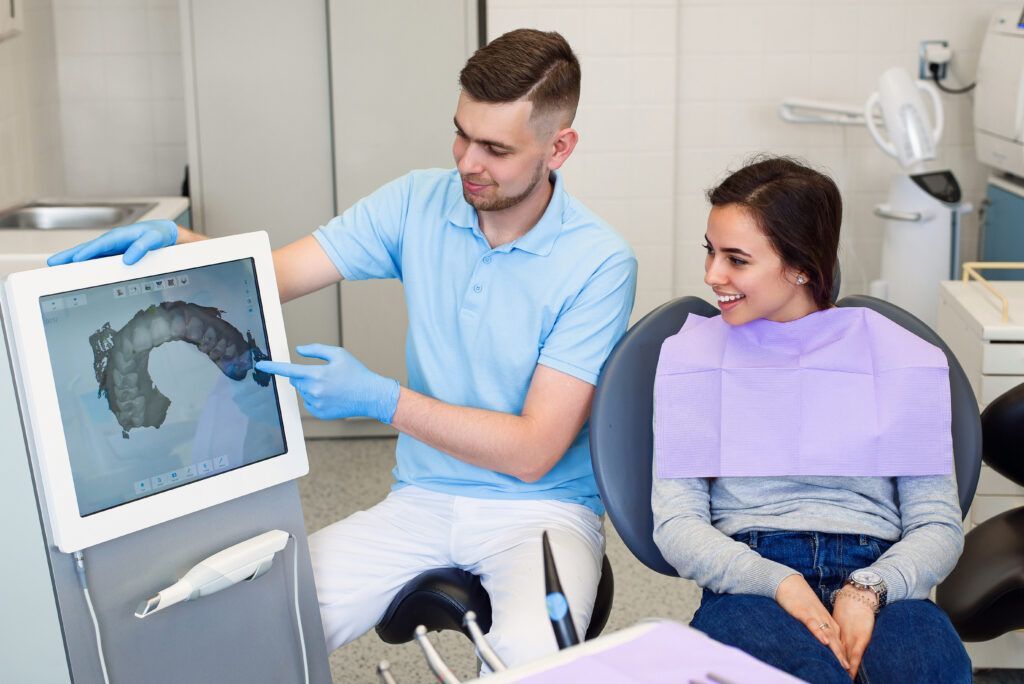
Intraoral scanners (IOS) are advanced devices that capture high-resolution, three-dimensional images of the oral cavity. These scanners replace traditional impression techniques, which can be uncomfortable for patients and prone to inaccuracies.
Benefits of intraoral scanners:
- Greater precision: According to a study by Logozzo (2014)IOS offers superior accuracy compared to conventional impressions, resulting in better-fitting appliances and improved treatment outcomes.
- Patient Comfort: The noninvasive nature of IOS eliminates the gag reflex associated with traditional impressions, improving the patient experience.
- Time efficiency: Digital impressions are faster to capture and process, streamlining workflow in orthodontic practices.
- Integration with CAD/CAM systems: Scanned data can be seamlessly integrated with computer-aided design and manufacturing (CAD/CAM) systems for the production of orthodontic appliances.
Digital Treatment Planning and Outcome Simulation
Digital treatment planning has become an essential aspect of orthodontic care. With the help of specialized software, orthodontists can visualize treatment results, simulate tooth movements and plan interventions with remarkable precision.
Key Benefits:
- Greater predictability: Simulation software allows orthodontists to visualize tooth movement and evaluate biomechanical forces. According to a study by Benja Sereewisai (2020), this capability improves treatment accuracy and reduces the risk of unwanted outcomes.
- Patient Participation: Digital simulations provide patients with a visual representation of expected outcomes, improving their understanding and compliance.
- Interdisciplinary planning: Software such as SureSmile or Dolphin Imaging facilitates collaboration with other dental professionals by integrating 3D images, CBCT scans and digital impressions.
Dental Monitoring: The Digital Revolution in Dental Care
In the digital age, oral health is also advancing with cutting-edge technology. Dental Monitoring It is a smart application that allows patients to follow their treatment without having to constantly go to the doctor's office.
Thanks to artificial intelligence and real-time analysis, dentists can monitor the progress of orthodontic and oral health treatments through images sent by the patient from their home. This not only saves time, but also improves the accuracy and efficiency of treatment.
With Dental Monitoring, dentistry becomes more accessible, comfortable and effective, offering an innovative experience for both specialists and patients.
Conclusion of the study
The future of orthodontics lies in the further integration of artificial intelligence and machine learning, which could automate treatment planning and improve diagnostic accuracy. Advances in biocompatible materials for 3D printing will likely expand the range of applications, making these technologies even more indispensable.
The adoption of 3D printing, intraoral scanners and digital treatment planning has transformed orthodontic practice, providing unparalleled precision and efficiency. These technologies not only improve clinical outcomes but also enrich the patient experience, paving the way for a new era in orthodontics.